
Policy Briefing
Engaging Civil Society: A Policy Brief
Civil society plays a crucial role in fostering democratic governance, promoting social accountability, and advocating for inclusive policy development. In Somalia, strengthening civil society engagement is vital for enhancing citizen participation, improving governance structures, and ensuring that marginalized communities have a voice in decision-making processes.
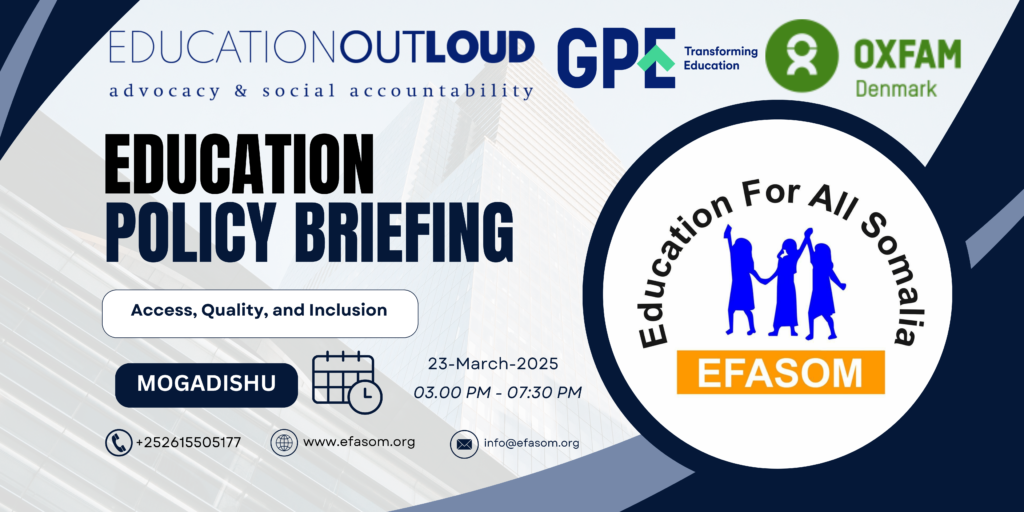
Bridging the Education Gap in Farming Communities
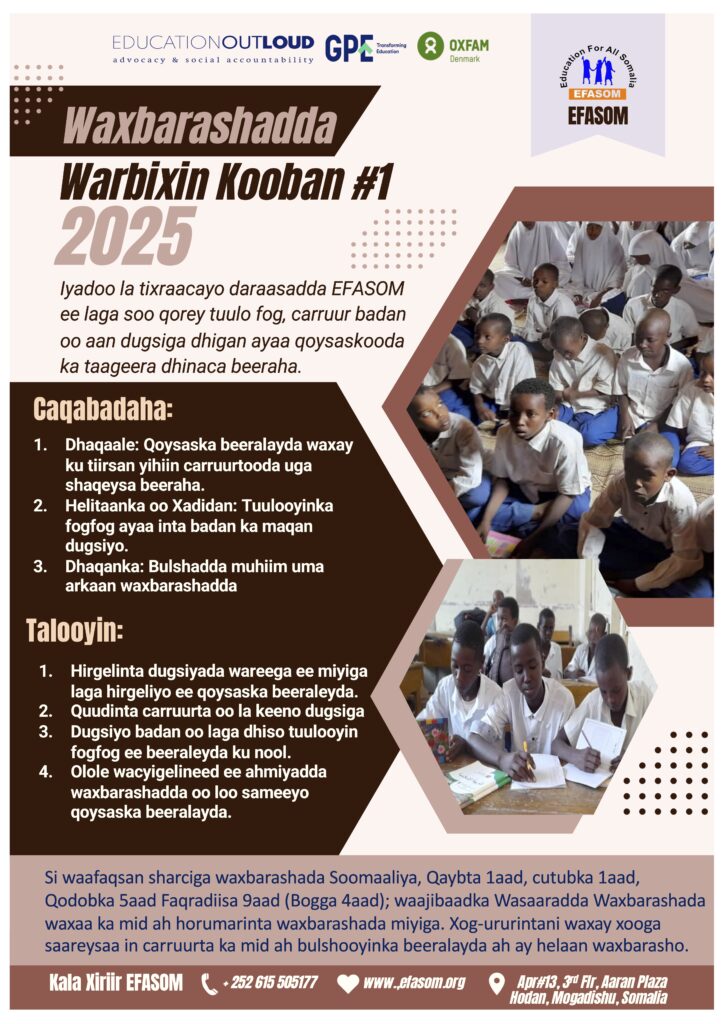
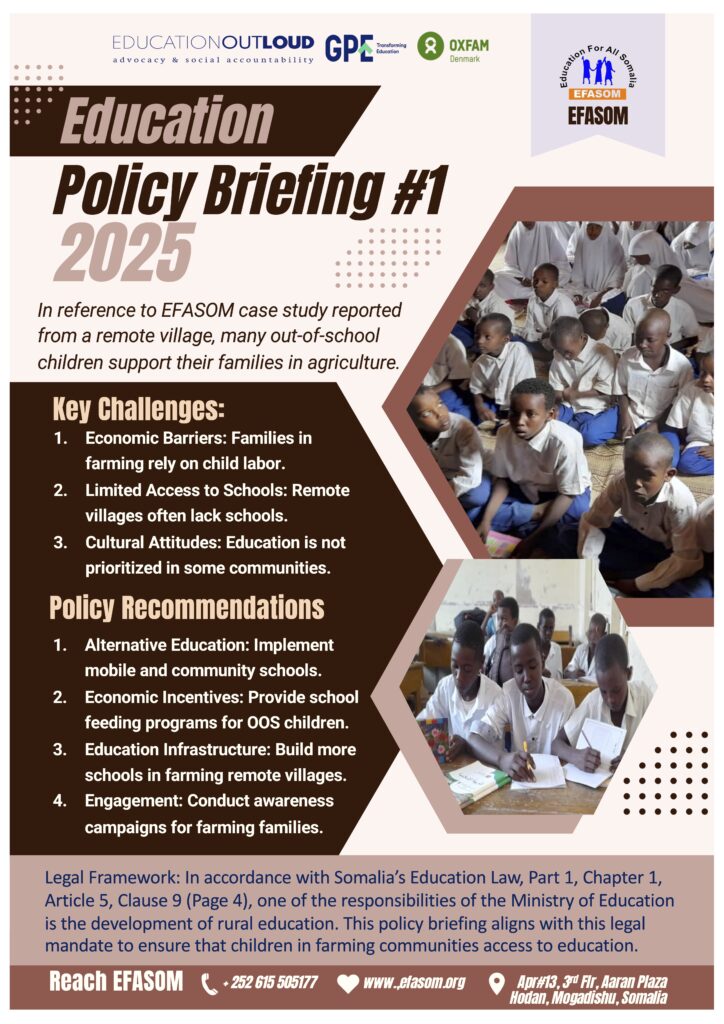
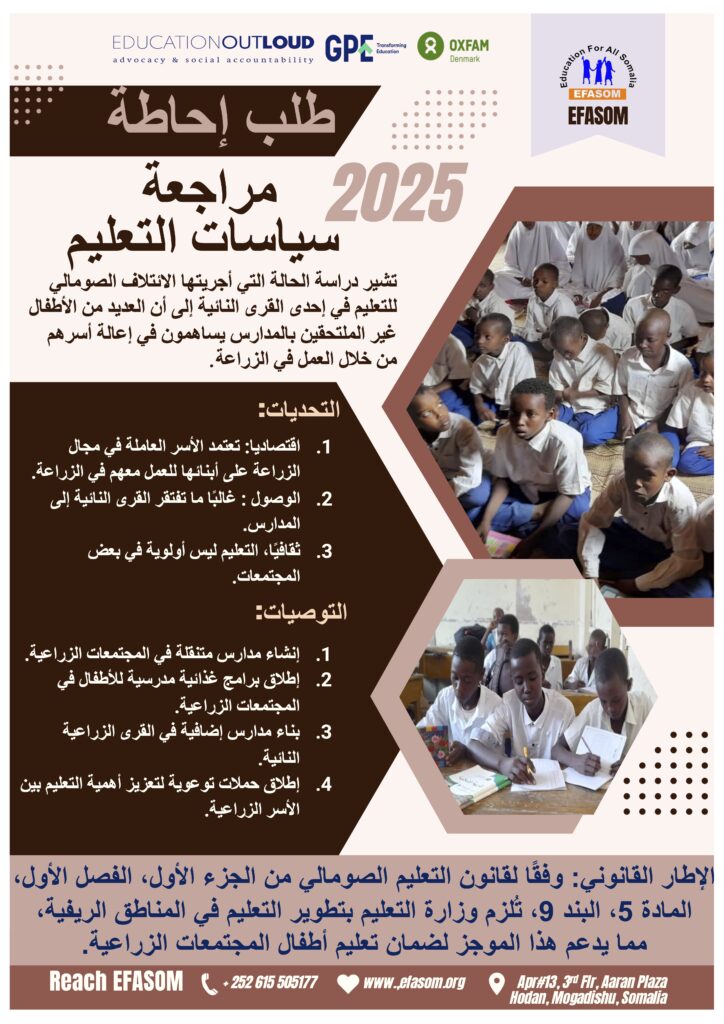
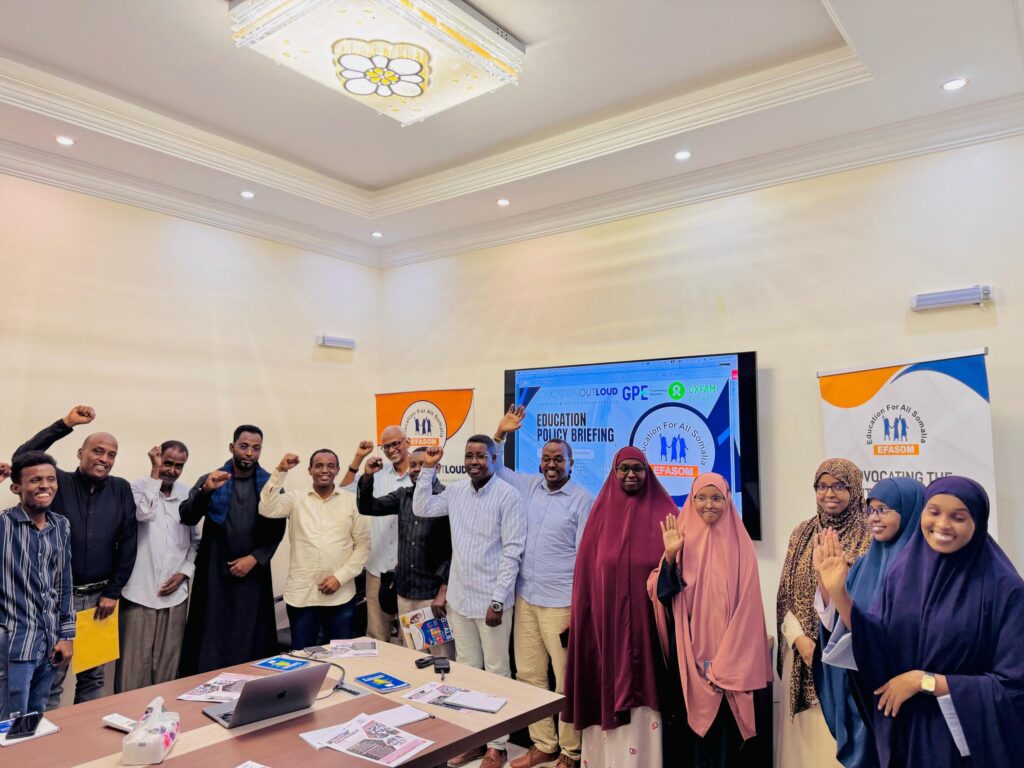
On 23-March-2025, a group of civil society actors gathered in Mogadishu to emphasize the importance of access to education for farming communities. During the event, EFASOM released a policy briefing statement to show the importance of the access to education for children in rural communities.
The discussion points included:
1. Challenges in Access to Education for Farming Communities: The group discussed the barriers, such as poverty, distance, and lack of infrastructure, that prevented children in farming communities from accessing education.
2. Impact of Education on Farming Communities: They explored how education contributed to the economic, social, and cultural development of farming communities, including increasing agricultural productivity and improving the standard of living.
3. Government and Policy Support: They debated the role of the government in ensuring educational opportunities for rural areas and the effectiveness of existing policies. They also discussed potential reforms to enhance education access in farming communities.
4. Role of Civil Society Organizations (CSOs): The group examined how CSOs played a pivotal role in raising awareness, providing resources, and collaborating with stakeholders to improve educational opportunities for rural children.
5. The Role of Technology in Education: They discussed how technology, including mobile learning, online courses, and digital resources, bridged the educational gap in remote farming communities.
6. Gender and Education: The group addressed the specific challenges faced by girls in farming communities and discussed strategies to promote gender equity in education.
7. Partnerships and Collaboration: They explored potential partnerships between the government, NGOs, the private sector, and local communities to improve access to quality education in rural areas.
8. Sustainable Solutions: The discussion focused on long-term, sustainable solutions to overcome educational challenges in farming communities, such as mobile schools, community-led education programs, and government investment.
9. Impact of Education on Child Labor: They debated the relationship between education and child labor in farming communities, and how education could reduce reliance on children in the workforce.
10. Advocacy and Awareness Campaigns: The group explored strategies for raising awareness at the national and international levels about the educational needs of farming communities and advocated for policy changes.
END